ASUS ROG G834JY-N6003XK RAM upgrade specifications

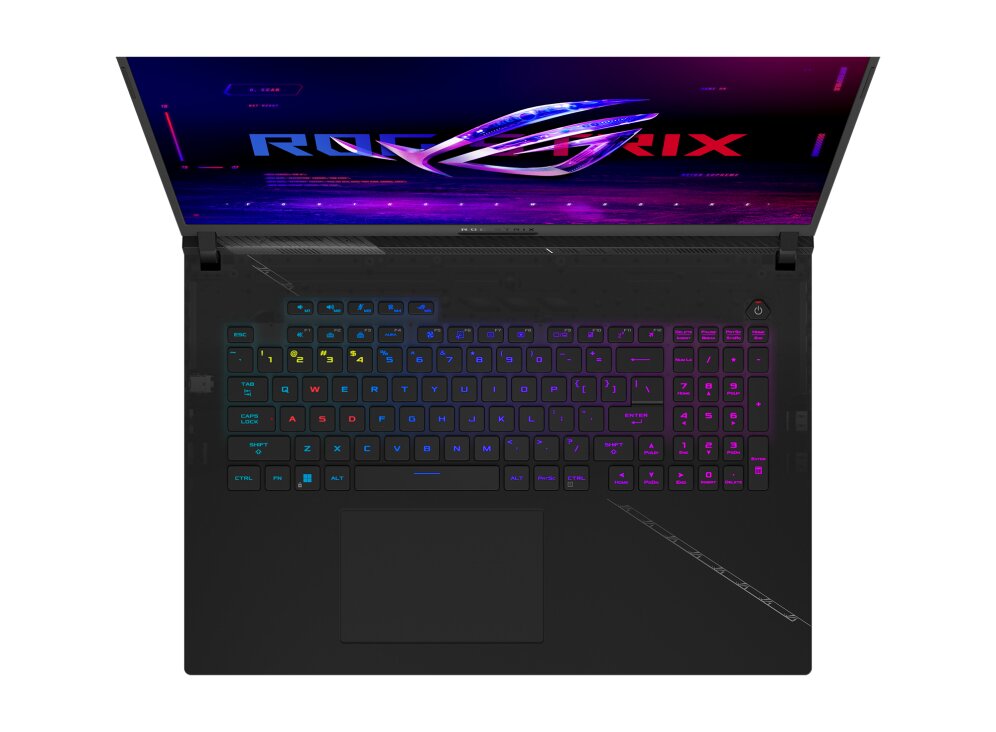


ASUS ROG Strix SCAR 18 G834JY-N6003XK supports DDR5-SDRAM memory upgrades with 2x SO-DIMM slots. Maximum compatible RAM capacity reaches 64 GB total. Memory operates at 4800 MHz frequency. Upgrade specifications utilize SO-DIMM form factor modules. Current and future memory configurations must meet these compatibility parameters for proper system performance.
Memory Upgrade Specifications
| Specification | Value |
|---|---|
| Memory slots | 2x SO-DIMM |
| Form factor | SO-DIMM |
| Memory type | DDR5-SDRAM |
| Frequency | 4800 MHz |
| Maximum RAM | 64 GB |
| Voltage | 1.1V |
| Number of pins | 262-pin |
| Interface | PC5 |
| PC Speed Rating | PC5-4800 (PC5-38400) |
| Bandwidth | 38.4 GB/s |
Additional Notes
- The DDR5-SDRAM architecture in the ASUS ROG G834JY-N6003XK operates at significantly higher bandwidth than DDR4 predecessors, delivering approximately 38.4 GB/s per module at 4800 MHz base frequency.
- The 2 SO-DIMM slot configuration limits expansion flexibility, requiring existing modules to be removed when upgrading to higher capacities rather than adding supplementary memory.
- The 64 GB ceiling indicates chipset-level memory controller restrictions, making configurations beyond 2x32 GB physically incompatible regardless of module availability.
- DDR5 modules utilize on-die ECC internally, which differs from traditional ECC memory and provides error correction at the DRAM chip level without requiring motherboard ECC support.
- The 4800 MHz specification represents JEDEC standard baseline speed, while the memory controller may support XMP 3.0 profiles for higher frequency operation if thermally sustainable.
- Mixing modules with different speeds will force all installed memory to operate at the lowest common frequency, potentially underutilizing faster modules.
- SO-DIMM form factor modules generate different thermal profiles compared to desktop DIMM equivalents, with heat dissipation dependent on chassis airflow design.
- DDR5's dual-channel architecture per module means 2 physical slots provide quad-channel equivalent bandwidth through internal subdivision.
- Voltage regulation moved onto DDR5 modules themselves via PMIC components, eliminating motherboard voltage supply as a compatibility variable.
- Capacity asymmetry between slots remains functional but disables performance-optimizing interleaving modes, reducing effective memory bandwidth.
- The maximum configuration requires both slots populated with identical 32 GB modules to maintain dual-channel symmetry and avoid bandwidth degradation.
- Warranty preservation typically requires manufacturer-approved memory specifications, with third-party modules potentially voiding coverage if damage occurs during installation.