ACER TravelMate TMP414RN-51-71KN RAM upgrade specifications
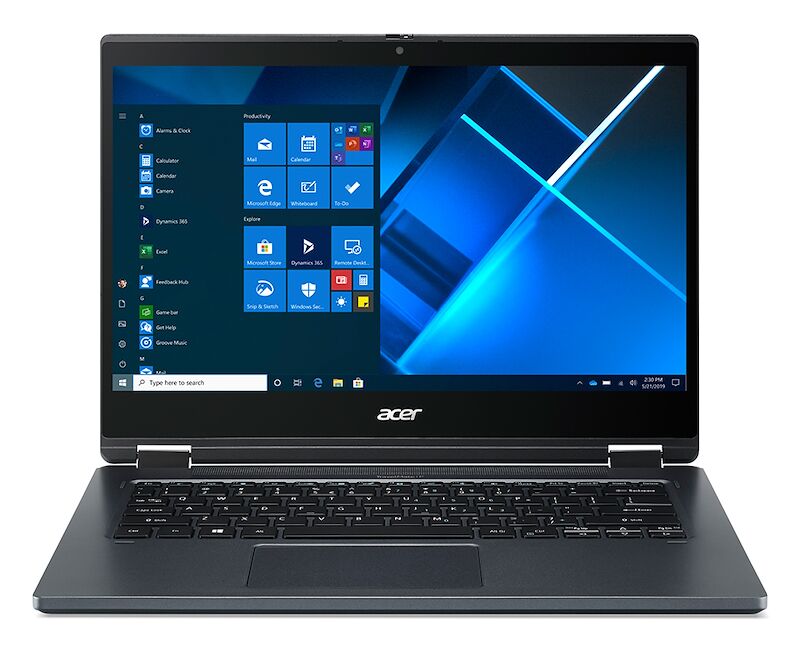




The Acer TravelMate Spin P4 TMP414RN-51-71KN laptop features DDR4-SDRAM memory upgrade specifications with two SO-DIMM slots supporting a maximum RAM capacity of 32 GB. The memory operates at 2133 MHz frequency. Compatible RAM upgrades utilize the SO-DIMM form factor, enabling users to expand the existing memory configuration up to the specified maximum capacity. Specifications indicate current memory installation supports standard DDR4 modules for this TravelMate Spin P4 series model.
Memory Upgrade Specifications
| Specification | Value |
|---|---|
| Memory slots | 2x SO-DIMM |
| Form factor | SO-DIMM |
| Memory type | DDR4-SDRAM |
| Frequency | 2133 MHz |
| Maximum RAM | 32 GB |
| Voltage | 1.2V |
| Number of pins | 260-pin |
| Interface | PC4 |
| PC Speed Rating | PC4-2133 (PC4-17064) |
| Bandwidth | 17.1 GB/s |
| Laptop Release date | 07 May 2021 |
Additional Notes
- The ACER TravelMate TMP414RN-51-71KN accepts only DDR4 modules, making DDR3 or DDR5 memory physically incompatible due to different notch positions and voltage requirements.
- The 2133 MHz frequency represents DDR4-2133 standard, operating at PC4-17000 bandwidth with 17.06 GB/s theoretical maximum throughput per channel.
- Installing higher-frequency modules such as 2400 MHz, 2666 MHz, or 3200 MHz will result in automatic downclocking to 2133 MHz, eliminating any performance advantage from faster memory.
- The 32 GB maximum capacity constraint requires either 2x16 GB configuration for full capacity or 2x8 GB for 16 GB total, as single-rank versus dual-rank architecture may affect integrated graphics performance differently.
- Dual-channel operation requires matching modules in both slots with identical capacity, speed, and preferably matching timings to avoid stability issues or forced single-channel mode.
- SO-DIMM form factor measures 67.6 mm in length versus 133.35 mm for standard DIMM, preventing desktop memory modules from physical installation.
- Memory operates at 1.2V standard for DDR4, while DDR3L low-voltage modules at 1.35V lack compatibility despite similar physical dimensions.
- Single-slot population results in single-channel operation, reducing memory bandwidth to approximately 8.5 GB/s and potentially limiting integrated GPU performance by up to 50%.
- CAS latency variations between CL15, CL17, and CL19 modules at 2133 MHz produce minimal real-world performance differences measured in nanoseconds of actual latency.
- ECC SO-DIMM modules remain physically compatible but non-functional in this configuration, as consumer chipsets lack error-correction support.
- JEDEC-standard unbuffered modules ensure compatibility, while registered or load-reduced memory types designed for server applications will fail to initialize.
- Warranty preservation typically requires avoiding disassembly of soldered bottom covers on ultraportable designs, though SO-DIMM slots generally remain accessible through dedicated service panels.