ASUS ROG G834JZR-R6041W RAM upgrade specifications

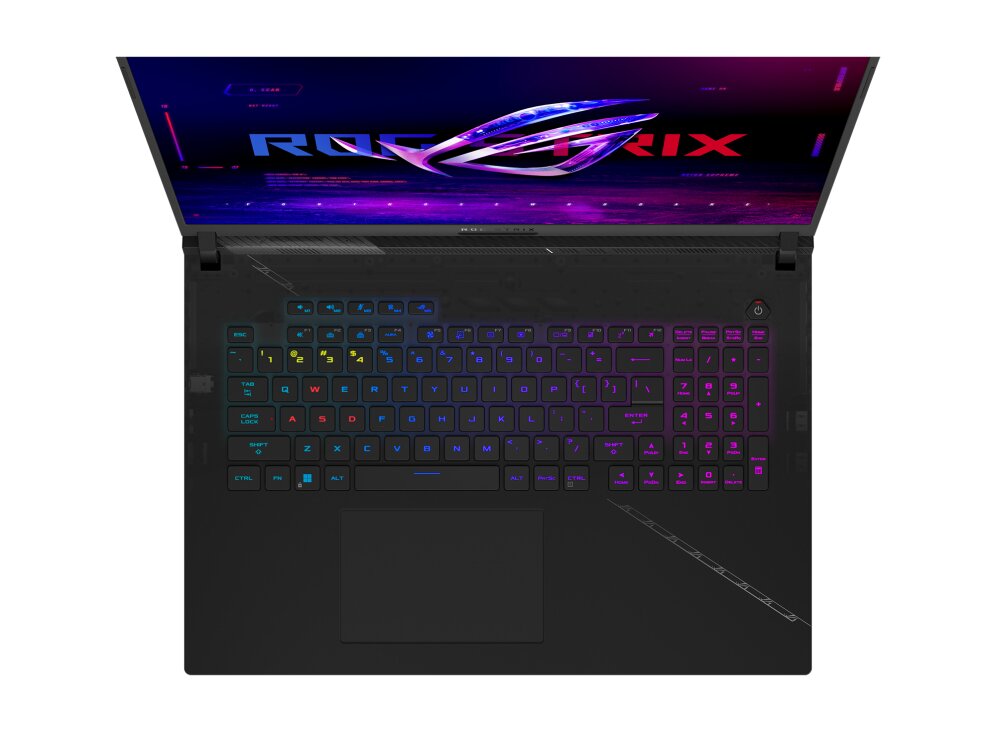



ASUS ROG Strix SCAR 18 G834JZR-R6041W laptop features DDR5-SDRAM memory upgrade capabilities. Compatible RAM utilizes SO-DIMM form factor with two available slots for maximum expansion to 64 GB total capacity. Memory specifications support DDR5 operating at 5600 MHz frequency. Upgrade configurations accommodate single or dual memory module installations within the two SO-DIMM slots. Maximum supported memory capacity reaches 64 GB when slots populated with compatible DDR5 modules.
Memory Upgrade Specifications
| Specification | Value |
|---|---|
| Memory slots | 2x SO-DIMM |
| Form factor | SO-DIMM |
| Memory type | DDR5-SDRAM |
| Frequency | 5600 MHz |
| Maximum RAM | 64 GB |
| Voltage | 1.1V |
| Number of pins | 262-pin |
| Interface | PC5 |
| PC Speed Rating | PC5-5600 (PC5-44800) |
| Bandwidth | 44.8 GB/s |
Additional Notes
- The ASUS ROG G834JZR-R6041W utilizes SO-DIMM modules instead of standard DIMMs, requiring physically smaller memory modules typically measuring 67.6 mm in length compared to desktop equivalents at 133.35 mm.
- The 5600 MHz frequency specification represents a JEDEC standard operating speed for DDR5, enabling voltage operation at 1.1V compared to DDR4's 1.2V requirement for improved thermal characteristics under sustained workloads.
- Dual-channel memory architecture across 2 slots necessitates matched pairs for optimal bandwidth utilization, as asymmetric configurations may force single-channel operation and reduce theoretical peak bandwidth from 89.6 GB/s to 44.8 GB/s.
- The 64 GB maximum capacity constraint stems from chipset memory controller limitations rather than physical slot restrictions, preventing installation of 48 GB modules even if SO-DIMM variants become commercially available.
- DDR5 architecture implements on-module voltage regulation through a power management integrated circuit, making compatibility dependent on both speed ratings and power delivery topology matching between modules and motherboard design.
- Memory upgrades require complete system power-down and battery disconnection to prevent electrical damage, as DDR5 SO-DIMMs lack hot-swap capabilities and maintain active power states during standard sleep modes.
- Frequency compatibility follows backward scaling behavior, where 6400 MHz modules will operate but downclock to the 5600 MHz specification, potentially creating stability issues if XMP/EXPO profiles remain enabled in firmware settings.
- Warranty preservation typically requires non-destructive access to memory slots, necessitating verification that module replacement procedures do not involve breaking tamper-evident seals positioned over primary chassis fasteners.
- Thermal performance at 5600 MHz operation generates approximately 20% more heat per module compared to 4800 MHz base specifications, making heatspreader presence relevant for sustained memory-intensive operations despite laptop cooling systems.
- The SO-DIMM form factor enforces 262-pin contact design with different keying positions than DDR4 variants, creating physical incompatibility that prevents installation of previous-generation modules regardless of slot dimensions.