ASUS TUF Gaming FA507RR-R76B37CS1 RAM upgrade specifications



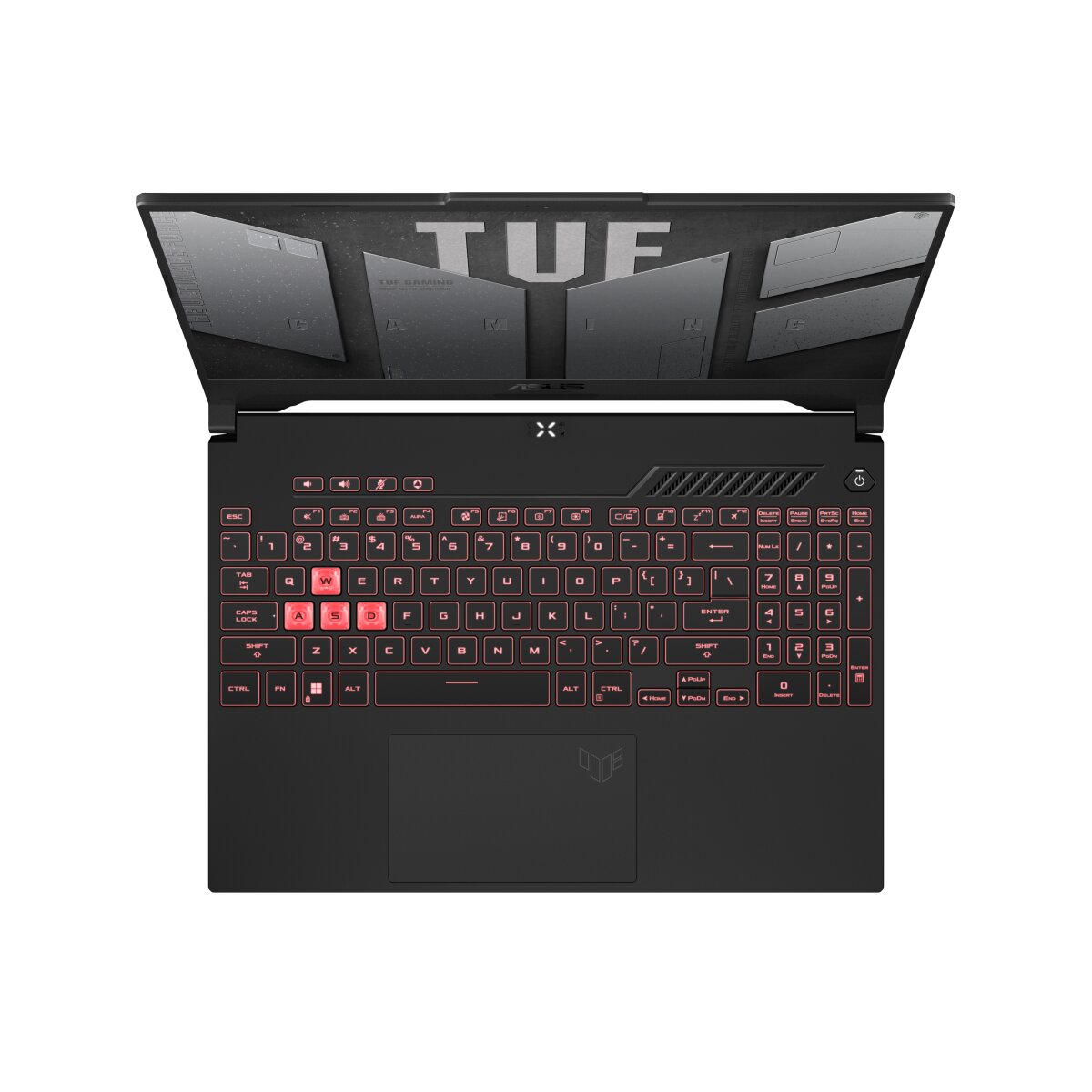

ASUS TUF Gaming A15 FA507RR-R76B37CS1 laptop features DDR5-SDRAM memory configuration with two SO-DIMM slots supporting maximum RAM capacity of 32 GB. Memory upgrade specifications indicate compatible DDR5 modules operating at 4800 MHz frequency. Slots accept SO-DIMM form factor memory modules for expanded capacity. Maximum supported memory configuration allows up to 32 GB total across both slots. Compatible RAM upgrade modules must match DDR5-SDRAM specifications and 4800 MHz frequency standards for optimal performance and compatibility with this gaming laptop model.
Memory Upgrade Specifications
| Specification | Value |
|---|---|
| Memory slots | 2x SO-DIMM |
| Form factor | SO-DIMM |
| Memory type | DDR5-SDRAM |
| Frequency | 4800 MHz |
| Maximum RAM | 32 GB |
| Voltage | 1.1V |
| Number of pins | 262-pin |
| Interface | PC5 |
| PC Speed Rating | PC5-4800 (PC5-38400) |
| Bandwidth | 38.4 GB/s |
Additional Notes
- The 32 GB ceiling derives from the chipset's addressing limitations rather than physical slot restrictions, preventing future expansion beyond this threshold regardless of higher-capacity modules becoming available.
- DDR5 modules operate with on-die ECC that remains invisible to the operating system, providing background error correction without the validation overhead of traditional server-grade ECC implementations.
- The dual-channel configuration requires identical module specifications in both slots to maintain bandwidth symmetry, as mismatched capacities or timings force the memory controller into single-channel or asymmetric operation.
- DDR5's split-bank architecture enables each SO-DIMM to function as two independent 32-bit channels, effectively quadrupling memory access granularity compared to DDR4's monolithic design.
- The 4800 MHz specification represents JEDEC's baseline DDR5 speed, meaning the memory controller lacks XMP/EXPO profile support for higher-frequency modules that would otherwise remain underclocked.
- Installation requires the battery disconnection procedure outlined in the service manual to prevent southbridge damage from voltage transients during module insertion.
- The ASUS TUF Gaming FA507RR-R76B37CS1 implements power management integrated circuits on each DDR5 module rather than on the motherboard, shifting voltage regulation responsibilities and thermal characteristics compared to previous-generation systems.
- SO-DIMM latency penalties become pronounced at 4800 MHz due to the format's trace length compromises, creating a roughly 10-15% performance gap versus equivalent desktop UDIMM configurations in bandwidth-sensitive workloads.
- Third-party modules must support the 1.1V JEDEC standard rather than DDR4's 1.2V requirement, as voltage incompatibility prevents POST completion even when physical installation succeeds.
- The non-upgradeable memory controller resides within the CPU package, meaning frequency limitations persist across RAM replacements and depend entirely on the installed processor's specifications.
- Warranty preservation requires using modules without integrated RGB lighting or non-standard heat spreaders that exceed the 31.25 mm SO-DIMM height specification and risk contact with the keyboard assembly.