MSI Prestige 15 A11SCX-409XES RAM upgrade specifications


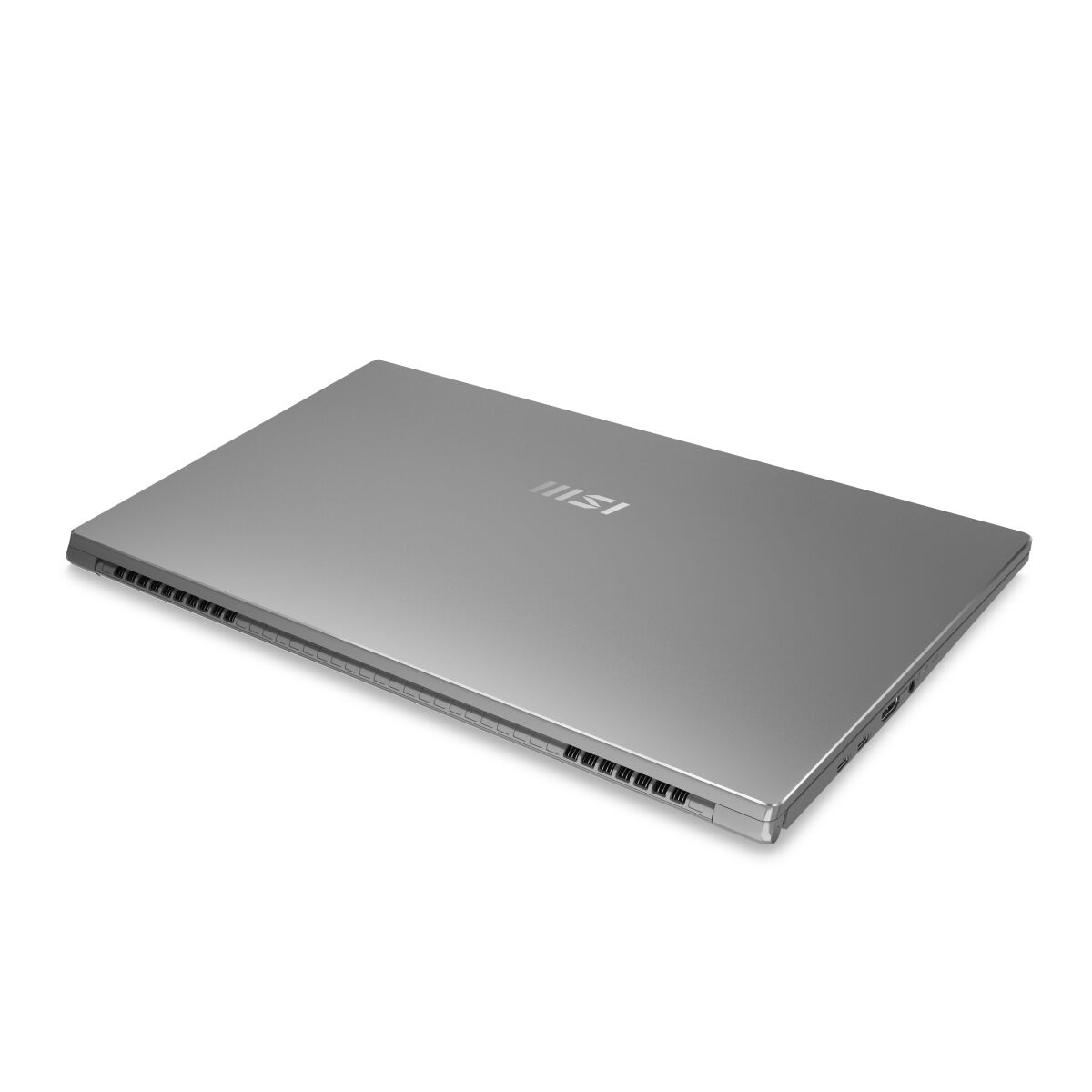


MSI Prestige 15 A11SCX-409XES laptop supports DDR4-SDRAM memory upgrades with two SO-DIMM slots available for expansion. The maximum RAM capacity reaches 64 GB, accommodating compatible DDR4 modules operating at 3200 MHz frequency. Current memory configuration and upgrade options depend on existing SO-DIMM installations. Specifications indicate support for standard laptop memory form factors, enabling users to expand storage capacity by replacing or adding modules within the dual-slot architecture.
Memory Upgrade Specifications
| Specification | Value |
|---|---|
| Memory slots | 2x SO-DIMM |
| Form factor | SO-DIMM |
| Memory type | DDR4-SDRAM |
| Frequency | 3200 MHz |
| Maximum RAM | 64 GB |
| Voltage | 1.2V |
| Number of pins | 260-pin |
| Interface | PC4 |
| PC Speed Rating | PC4-3200 (PC4-25600) |
| Bandwidth | 25.6 GB/s |
| Laptop Release date | 13 April 2021 |
Additional Notes
- The MSI Prestige 15 A11SCX-409XES accepts only DDR4 modules, preventing installation of older DDR3 or newer DDR5 memory due to physical notch incompatibility and voltage differences.
- Both memory slots support dual-channel architecture, enabling doubled theoretical bandwidth when populated with matched capacity and speed modules.
- The 3200 MHz frequency specification indicates that faster modules will downclock to this speed, wasting the cost premium of higher-rated memory.
- Installing a single module forces single-channel operation, halving memory bandwidth and potentially reducing integrated graphics performance by 20 to 40 percent in GPU-intensive tasks.
- The 64 GB maximum capacity constraint limits each slot to 32 GB modules, making 48 GB configurations impossible without leaving one slot empty.
- Standard SO-DIMM DDR4 modules measure 67.6 mm in length, but low-profile variants may be necessary if thermal solutions or chassis design create clearance restrictions above the memory bay.
- Mixing modules with different speeds forces all memory to operate at the slowest module's frequency, creating performance degradation.
- Non-matching module capacities between slots still enables dual-channel mode through flex architecture, but only the lowest common capacity operates in dual-channel while excess capacity runs in single-channel.
- Laptop manufacturers often apply BIOS-level restrictions that prevent official memory speeds from exceeding JEDEC standards, making XMP or overclocked modules unreliable without manual timing adjustments.
- Access to SO-DIMM slots typically requires bottom panel removal, which may involve breaking security seals that void warranties under certain regional service policies.
- Operating voltage for DDR4 SO-DIMM modules must remain at 1.2V standard, as higher-voltage variants designed for desktops risk thermal throttling or system instability in confined laptop enclosures.
- CAS latency variations between modules can cause POST failures or force the system to apply conservative timings that negate performance differences between premium and budget memory kits.