ACER Aspire VX5-591G-7972 RAM upgrade specifications




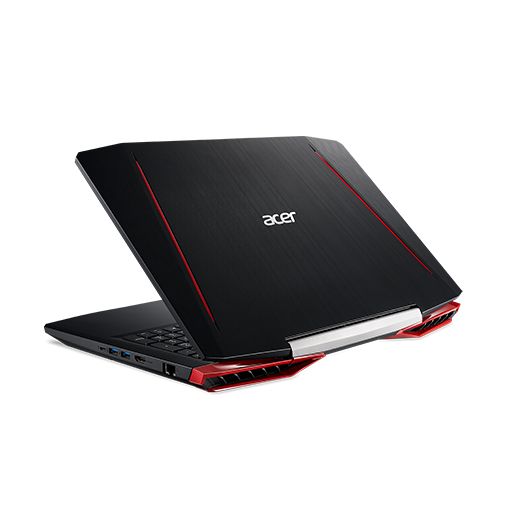
The ACER Aspire VX 15 VX5-591G-7972 laptop features two SO-DIMM slots supporting DDR4-SDRAM memory upgrades. Maximum RAM capacity reaches 32 GB total, with compatible modules operating at 2400 MHz frequency. The upgrade specifications indicate SO-DIMM form factor memory modules are required for this model. Existing memory configurations can be expanded to the maximum 32 GB capacity through compatible DDR4 RAM upgrades in the available slots.
Memory Upgrade Specifications
| Specification | Value |
|---|---|
| Memory slots | 2x SO-DIMM |
| Form factor | SO-DIMM |
| Memory type | DDR4-SDRAM |
| Frequency | 2400 MHz |
| Maximum RAM | 32 GB |
| Voltage | 1.2V |
| Number of pins | 260-pin |
| Interface | PC4 |
| PC Speed Rating | PC4-2400 (PC4-19200) |
| Bandwidth | 19.2 GB/s |
| Laptop Release date | 03 September 2017 |
Additional Notes
- The 2400 MHz frequency specification indicates DDR4-2400 compatibility, which operates at a PC4-19200 data transfer rate of 19.2 GB/s per module.
- SO-DIMM form factor restricts upgrades to laptop-specific memory modules measuring 67.6 mm in length, incompatible with standard desktop DIMM modules at 133.35 mm.
- The 32 GB maximum capacity constraint limits configurations to either 2x16 GB modules or asymmetric pairing such as 8 GB plus 24 GB, though symmetric configurations typically provide better dual-channel efficiency.
- Both memory slots must be populated with matching frequency modules to maintain dual-channel bandwidth of 38.4 GB/s, as single-channel operation halves theoretical memory throughput.
- Installing faster DDR4 modules rated above 2400 MHz will result in automatic downclocking to 2400 MHz, negating any speed advantage from higher-spec RAM.
- The 2x SO-DIMM configuration requires complete motherboard disassembly or bottom panel removal depending on slot accessibility, as laptops typically position memory under the keyboard assembly or rear service cover.
- DDR4 voltage standards at 1.2V eliminate compatibility with DDR3L or DDR3 modules despite physical SO-DIMM similarity, as the notch positioning differs by 3 mm to prevent incorrect installation.
- Mixing modules with different CAS latency timings will force all modules to operate at the slowest timing specification, potentially degrading performance below optimal levels for this frequency class.
- The Intel 7th generation platform associated with VX5-series models supports only unbuffered non-ECC SO-DIMMs, rendering registered or ECC memory types incompatible regardless of capacity or speed ratings.
- Memory upgrades beyond factory configuration may require BIOS recognition cycles or CMOS reset procedures if the system fails initial POST after installation.