ASUS ROG G733PZ-LL026X RAM upgrade specifications
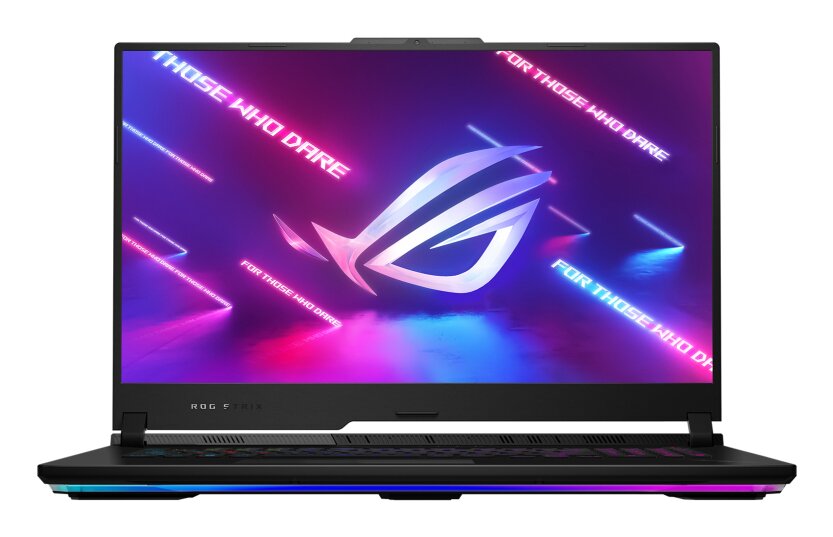




The ASUS ROG Strix SCAR 17 G733PZ-LL026X laptop features DDR5-SDRAM memory upgrade capabilities with two SO-DIMM slots supporting a maximum RAM capacity of 64 GB. The memory specifications include DDR5 compatibility at 4800 MHz frequency. This gaming laptop model accommodates SO-DIMM form factor modules for memory expansion and upgrades to enhance system performance.
Memory Upgrade Specifications
| Specification | Value |
|---|---|
| Memory slots | 2x SO-DIMM |
| Form factor | SO-DIMM |
| Memory type | DDR5-SDRAM |
| Frequency | 4800 MHz |
| Maximum RAM | 64 GB |
| Voltage | 1.1V |
| Number of pins | 262-pin |
| Interface | PC5 |
| PC Speed Rating | PC5-4800 (PC5-38400) |
| Bandwidth | 38.4 GB/s |
Additional Notes
- The ASUS ROG G733PZ-LL026X utilizes SO-DIMM modules rather than standard desktop DIMMs, requiring physically smaller memory components with 260-pin configurations instead of the 288-pin layout found in tower systems.
- DDR5-SDRAM technology operates at 1.1 volts compared to DDR4's 1.2 volts, reducing heat generation during extended gaming sessions while improving power efficiency under sustained workloads.
- The dual-channel architecture achievable through both populated slots delivers 76.8 GB/s theoretical bandwidth at 4800 MHz, doubling the throughput compared to single-channel configurations.
- Achieving the 64 GB ceiling requires two 32 GB modules, as DDR5 SO-DIMM density limits currently make this the only viable configuration for reaching maximum capacity.
- Memory rated below 4800 MHz will function but automatically downclock to its rated speed, potentially creating performance asymmetry if modules with different frequencies are mixed.
- DDR5's on-die ECC (error correction) operates independently of system-level ECC support, providing background data integrity checking without requiring specialized unbuffered ECC modules.
- The 4800 MHz specification represents JEDEC standard speed, eliminating the need for XMP profile activation that higher-speed kits would require through BIOS configuration.
- Accessing the SO-DIMM slots typically requires bottom panel removal, which may involve displacing thermal components or breaking factory seals depending on the chassis design.
- DDR5 modules cannot physically install in DDR4 slots due to differently positioned notch locations, preventing accidental insertion of incompatible memory types.
- Mixing module capacities such as 16 GB with 32 GB maintains dual-channel operation but only for the matched lower capacity portion, with the excess operating in slower single-channel mode.
- The 4800 MHz data rate translates to a 2400 MHz actual clock frequency, as DDR technology transfers data on both rising and falling clock edges.
- Temperature sensors integrated into DDR5 modules enable real-time thermal monitoring, allowing the system to throttle memory speeds if operating temperatures exceed safe thresholds during intensive tasks.