ASUS TUF Gaming FA507NU-LP105W RAM upgrade specifications




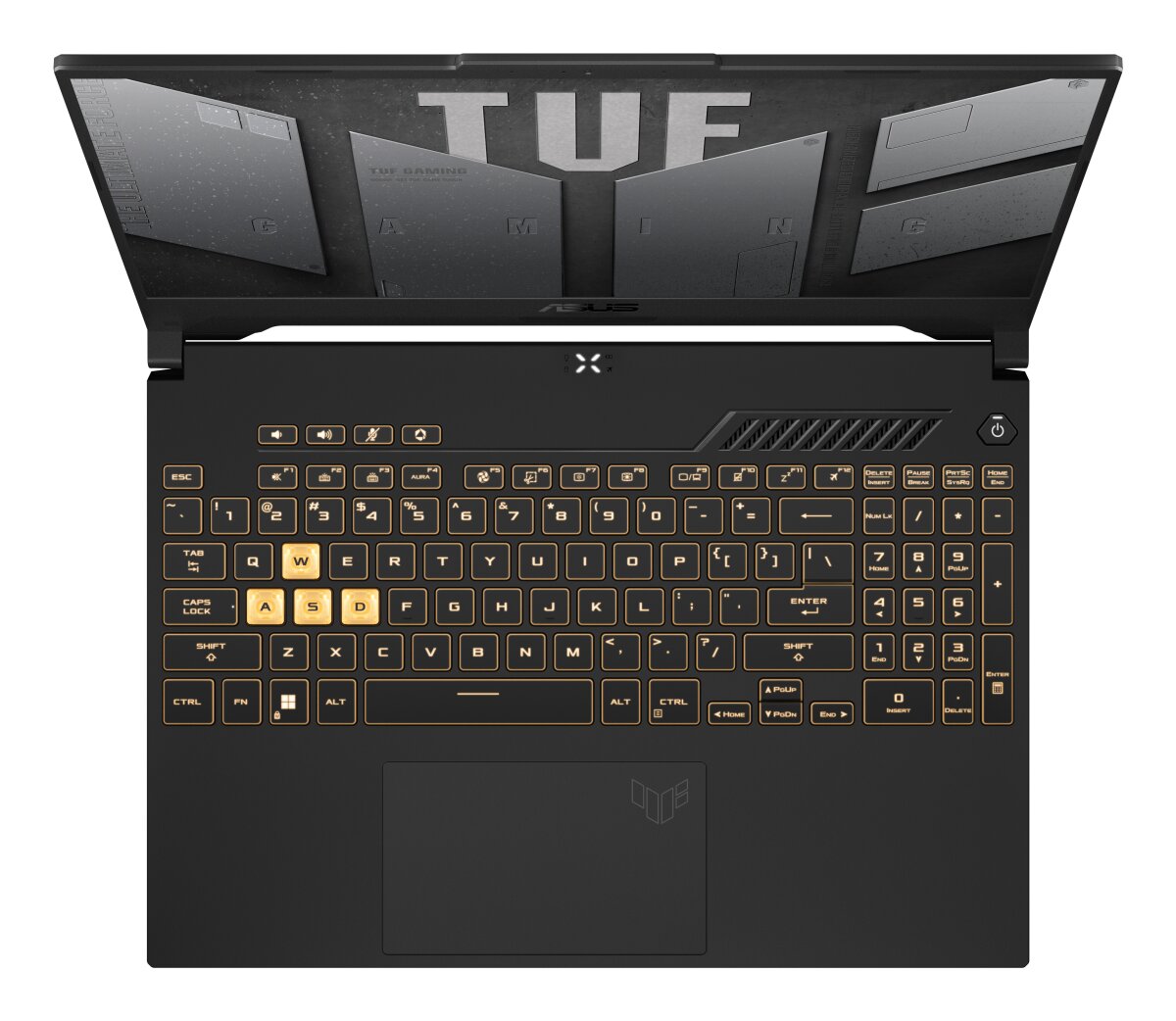
ASUS TUF Gaming A15 series model FA507NU-LP105W features dual SO-DIMM memory slots supporting DDR5-SDRAM upgrade capacity. Maximum RAM specifications allow installation of up to 32 GB total memory. Compatible DDR5 modules operate at 4800 MHz frequency. The laptop's memory upgrade configuration provides expansion capability through two SO-DIMM slots, enabling users to install matching DDR5-SDRAM modules to reach maximum supported capacity.
Memory Upgrade Specifications
| Specification | Value |
|---|---|
| Memory slots | 2x SO-DIMM |
| Form factor | SO-DIMM |
| Memory type | DDR5-SDRAM |
| Frequency | 4800 MHz |
| Maximum RAM | 32 GB |
| Voltage | 1.1V |
| Number of pins | 262-pin |
| Interface | PC5 |
| PC Speed Rating | PC5-4800 (PC5-38400) |
| Bandwidth | 38.4 GB/s |
Additional Notes
- The ASUS TUF Gaming FA507NU-LP105W supports dual-channel memory architecture through its 2 SO-DIMM slots, enabling up to 100% theoretical bandwidth increase compared to single-channel configurations when both slots are populated with matched modules.
- DDR5-4800 represents the JEDEC baseline specification for DDR5 technology, meaning modules rated at higher frequencies will downclock to 4800 MHz when installed in this system.
- The 32 GB maximum capacity constraint indicates chipset or BIOS limitations that prevent recognition of higher-density modules, restricting installations to 2x16 GB configurations as the maximum supported topology.
- DDR5 SO-DIMM modules operate exclusively at 1.1V compared to DDR4's 1.2V, eliminating any cross-generation compatibility and requiring complete replacement rather than supplementation during upgrades.
- The 4800 MHz native frequency delivers 38.4 GB/s theoretical bandwidth per channel, totaling 76.8 GB/s in dual-channel mode when both slots function simultaneously.
- SO-DIMM form factor compatibility restricts installations to modules measuring 69.6mm in length, excluding standard DIMM desktop memory which measures 133.35mm and physically cannot fit the slots.
- DDR5's on-module power management integrated circuits (PMIC) and on-die error correction code (ECC) introduce module-level validation requirements that may cause incompatibility with certain third-party RAM despite matching speed specifications.
- Upgrading from lower capacities to the 32 GB maximum requires purchasing modules in matched pairs to maintain dual-channel functionality, as mismatched capacities force the system into asymmetric or flex mode with reduced performance.
- The platform's memory controller locks frequency at 4800 MHz regardless of installed module XMP/EXPO profiles, making premium-binned high-frequency kits functionally identical to baseline-rated modules in this specific system.
- DDR5's doubled burst length of 16 compared to DDR4's 8 results in higher minimum latency at equivalent CAS ratings, meaning CL40 DDR5-4800 delivers similar effective latency to CL20 DDR4-3200.