ASUS ROG G513RM-HQ151W-BE RAM upgrade specifications




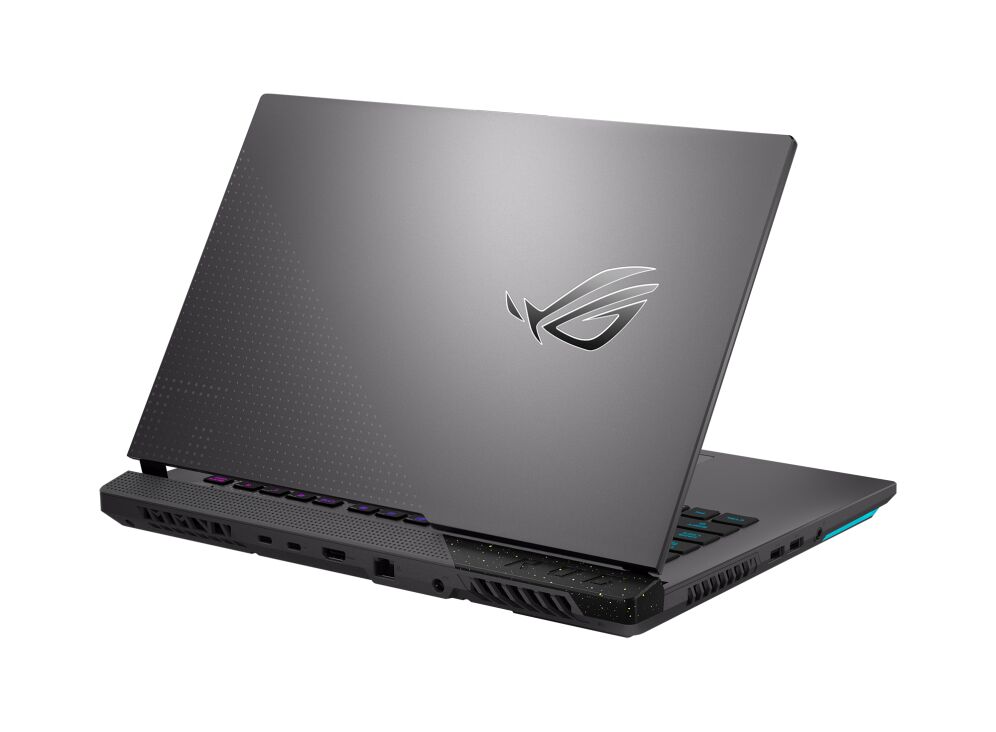
The ASUS ROG Strix G15 G513RM-HQ151W-BE laptop features DDR5-SDRAM memory with two SO-DIMM slots for RAM upgrade capabilities. The system supports maximum memory capacity of 32 GB total, with compatible modules operating at 4800 MHz frequency. Specifications indicate upgrade potential through SO-DIMM form factor slots, enabling users to expand memory configuration as needed for enhanced performance.
Memory Upgrade Specifications
| Specification | Value |
|---|---|
| Memory slots | 2x SO-DIMM |
| Form factor | SO-DIMM |
| Memory type | DDR5-SDRAM |
| Frequency | 4800 MHz |
| Maximum RAM | 32 GB |
| Voltage | 1.1V |
| Number of pins | 262-pin |
| Interface | PC5 |
| PC Speed Rating | PC5-4800 (PC5-38400) |
| Bandwidth | 38.4 GB/s |
| Laptop Release date | 10 January 2022 |
Additional Notes
- The DDR5-4800 specification indicates this ASUS ROG G513RM-HQ151W-BE operates on JEDEC baseline standards rather than utilizing higher XMP/EXPO profiles, which may limit performance headroom compared to desktop DDR5 implementations running at 5200 MHz or above.
- The 32 GB maximum capacity constraint across 2 slots requires 16 GB modules per slot to reach full capacity, as installing mixed densities would trigger asymmetric dual-channel operation and reduce memory interleaving efficiency.
- SO-DIMM form factor restricts thermal dissipation compared to full-size DIMMs, making passive cooling reliant on chassis airflow rather than module-mounted heatspreaders, which affects sustained performance under thermal throttling conditions.
- DDR5 architecture introduces on-die ECC that operates independently of system-level error correction, providing background data integrity without BIOS configuration but remaining invisible to diagnostic software.
- The 4800 MHz native frequency operates at 1.1V baseline voltage per JEDEC standards, creating incompatibility with DDR4 modules despite physical SO-DIMM similarity due to notch repositioning and voltage plane differences.
- Dual-channel configuration with 2 populated slots enables maximum theoretical bandwidth of 76.8 GB/s, though real-world throughput depends on memory controller efficiency and application access patterns.
- Upgrading from factory configuration to 32 GB maintains warranty validity when using JEDEC-compliant modules, whereas overclocked or non-standard voltage modules may void coverage depending on regional warranty terms.
- Memory latency at DDR5-4800 typically ranges between CL40-CL46, representing higher absolute nanosecond delays than equivalent DDR4-3200 CL16 configurations despite increased bandwidth advantages.
- The SO-DIMM slot mechanism lacks the reinforced locking tabs found in server-grade implementations, requiring careful insertion pressure to avoid contact deformation during installation procedures.
- Population of both memory slots increases power draw by approximately 3 to 5 watts compared to single-slot configurations, marginally affecting battery runtime during mobile operation scenarios.