ASUS ROG GX650PY-NM032X RAM upgrade specifications




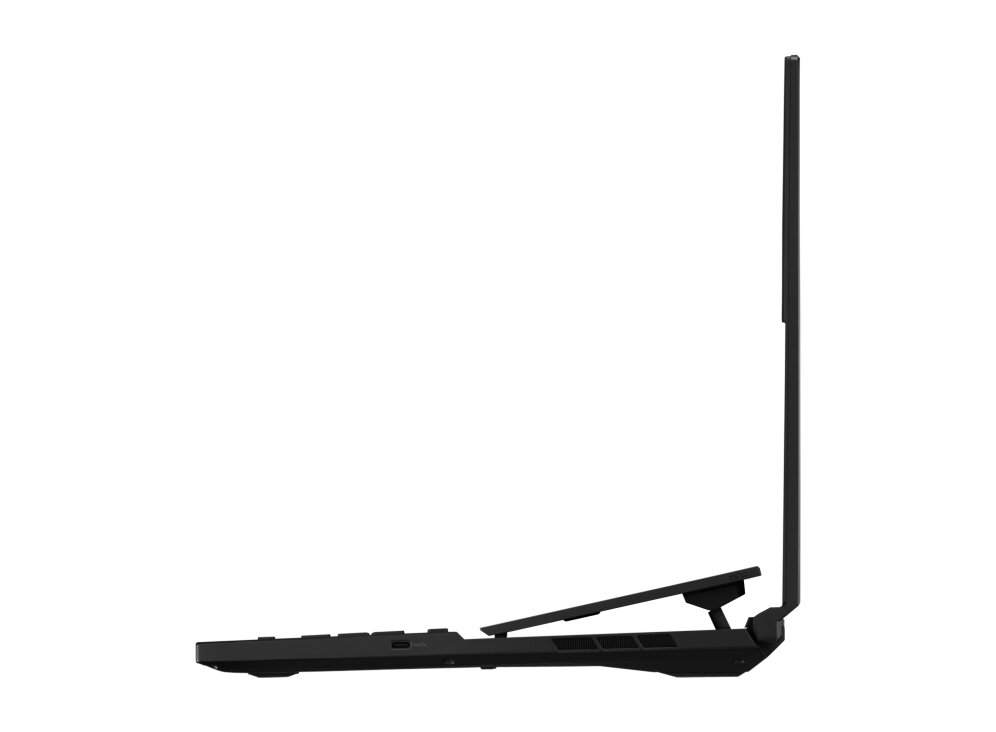
ASUS ROG Zephyrus Duo 16 model GX650PY-NM032X specifications indicate DDR5-SDRAM memory upgrade capacity with two SO-DIMM slots supporting maximum RAM of 64 GB total. Compatible memory modules operate at 4800 MHz frequency. Upgrade specifications utilize SO-DIMM form factor modules, enabling users to expand laptop memory beyond original configuration. Memory slots accommodate DDR5 technology for enhanced performance and bandwidth capabilities on this gaming-class system.
Memory Upgrade Specifications
| Specification | Value |
|---|---|
| Memory slots | 2x SO-DIMM |
| Form factor | SO-DIMM |
| Memory type | DDR5-SDRAM |
| Frequency | 4800 MHz |
| Maximum RAM | 64 GB |
| Voltage | 1.1V |
| Number of pins | 262-pin |
| Interface | PC5 |
| PC Speed Rating | PC5-4800 (PC5-38400) |
| Bandwidth | 38.4 GB/s |
Additional Notes
- The ASUS ROG GX650PY-NM032X supports only DDR5 modules, making DDR4 or earlier generation memory physically and electrically incompatible with the motherboard slot design.
- The 64 GB maximum capacity limit translates to 32 GB per slot when both SO-DIMM positions are populated, as higher density modules will not be recognized by the system firmware.
- DDR5 SO-DIMM modules operate at 1.1V compared to DDR4's 1.2V, which prevents cross-generation installation and protects the memory controller from voltage-related damage.
- The 4800 MHz native frequency represents JEDEC baseline speed for DDR5, meaning faster modules rated at 5200 MHz or 5600 MHz will downclock to 4800 MHz unless XMP/EXPO profiles are supported and enabled in BIOS.
- SO-DIMM form factor restricts installation to laptop-specific modules measuring 67.6 mm in length, as standard desktop DIMM modules at 133.35 mm will not fit the physical slot dimensions.
- Dual-slot configuration enables dual-channel memory architecture, which effectively doubles memory bandwidth compared to single-channel operation when matched pairs are installed.
- DDR5's on-die ECC functionality operates independently of the system's error correction capabilities, providing internal data integrity checks without requiring ECC-specific module variants.
- Memory upgrades maintaining identical frequency and latency timings across both slots prevent potential stability issues caused by asymmetric dual-channel configurations.
- The 4800 MHz operating speed delivers 38.4 GB/s theoretical bandwidth per channel, totaling 76.8 GB/s in dual-channel mode for memory-intensive applications.
- User-accessible SO-DIMM slots typically allow warranty-compliant upgrades, though verification of specific regional warranty terms remains necessary before module replacement.