ASUS ROG GX650PY-NM047X RAM upgrade specifications




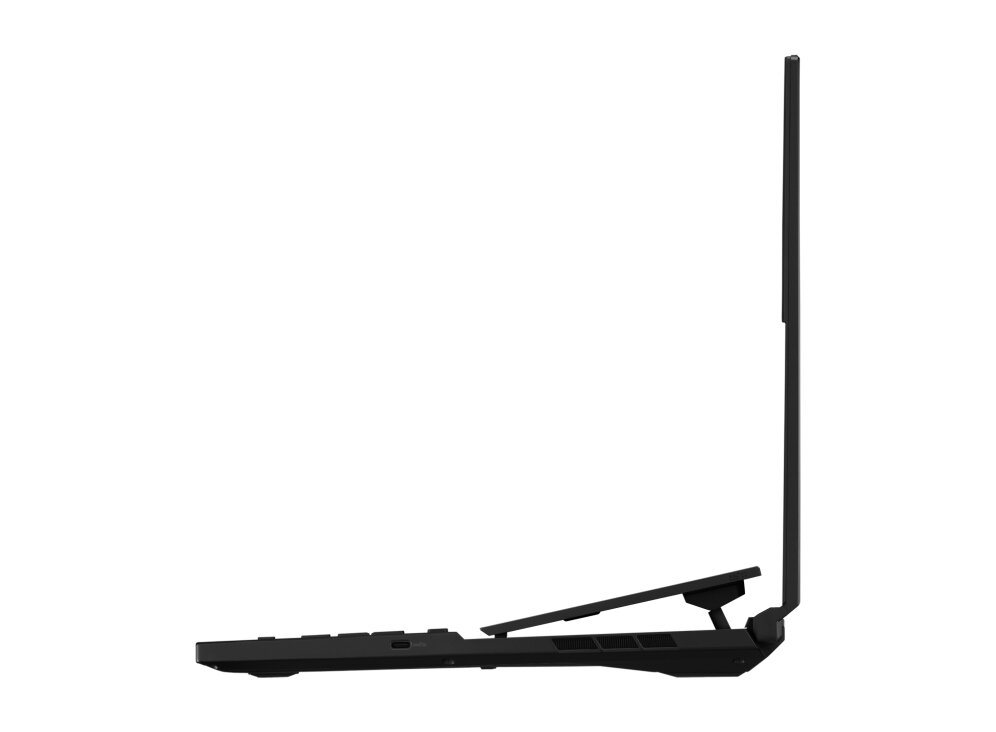
The ASUS ROG Zephyrus Duo 16 GX650PY-NM047X laptop features two SO-DIMM slots for memory upgrade capabilities. This gaming notebook supports DDR5-SDRAM memory operating at 4800 MHz frequency. The maximum RAM capacity for this model reaches 64 GB, enabling significant memory expansion. Compatible upgrade configurations allow for installation of DDR5 SO-DIMM modules to enhance multitasking performance and gaming capabilities. The dual-slot configuration provides flexibility in upgrading memory specifications according to user requirements.
Memory Upgrade Specifications
| Specification | Value |
|---|---|
| Memory slots | 2x SO-DIMM |
| Form factor | SO-DIMM |
| Memory type | DDR5-SDRAM |
| Frequency | 4800 MHz |
| Maximum RAM | 64 GB |
| Voltage | 1.1V |
| Number of pins | 262-pin |
| Interface | PC5 |
| PC Speed Rating | PC5-4800 (PC5-38400) |
| Bandwidth | 38.4 GB/s |
| Laptop Release date | 08 January 2023 |
Additional Notes
- The ASUS ROG GX650PY-NM047X enforces DDR5-only compatibility, making DDR4 modules physically and electrically incompatible due to different notch positioning and voltage requirements.
- SO-DIMM form factor restricts module height to approximately 30mm, preventing installation of standard DIMM desktop modules which exceed 130mm in length.
- The 64 GB ceiling translates to a maximum module density of 32 GB per slot, requiring dual-rank architecture that may introduce slight latency penalties compared to single-rank configurations.
- Native 4800 MHz operation represents JEDEC baseline speeds for DDR5, allowing theoretical bandwidth of 38.4 GB/s per channel without requiring XMP/EXPO profile activation.
- Upgrading to higher-frequency modules beyond 4800 MHz depends on motherboard BIOS support and CPU memory controller tolerance, with no guarantee of POST stability.
- The 2-slot configuration eliminates future expansion once both slots are populated, necessitating full module replacement rather than incremental capacity additions.
- Mixed-capacity configurations (e.g., 16 GB + 32 GB) will operate in asymmetric dual-channel mode, maintaining bandwidth benefits while introducing minor scheduling inefficiencies.
- DDR5's on-DIMM voltage regulation (PMIC) shifts power delivery from motherboard to module level, affecting thermal dissipation patterns within the laptop chassis.
- Manufacturer-installed modules typically lack heat spreaders due to laptop clearance constraints, limiting passive cooling compared to aftermarket performance-oriented SO-DIMMs.
- User-accessible RAM slots preserve upgrade eligibility under most warranty terms, unlike soldered memory architectures that void coverage upon tampering attempts.
- Frequency downclocking occurs automatically when mixing modules of different speeds, with the system defaulting to the lowest common specification across both slots.
- CAS latency absolute timing remains comparable to DDR4 despite higher cycle counts, as DDR5's faster base clock offsets the numerical latency increase.