ASUS TUF Gaming FA808UM-S8011W RAM upgrade specifications




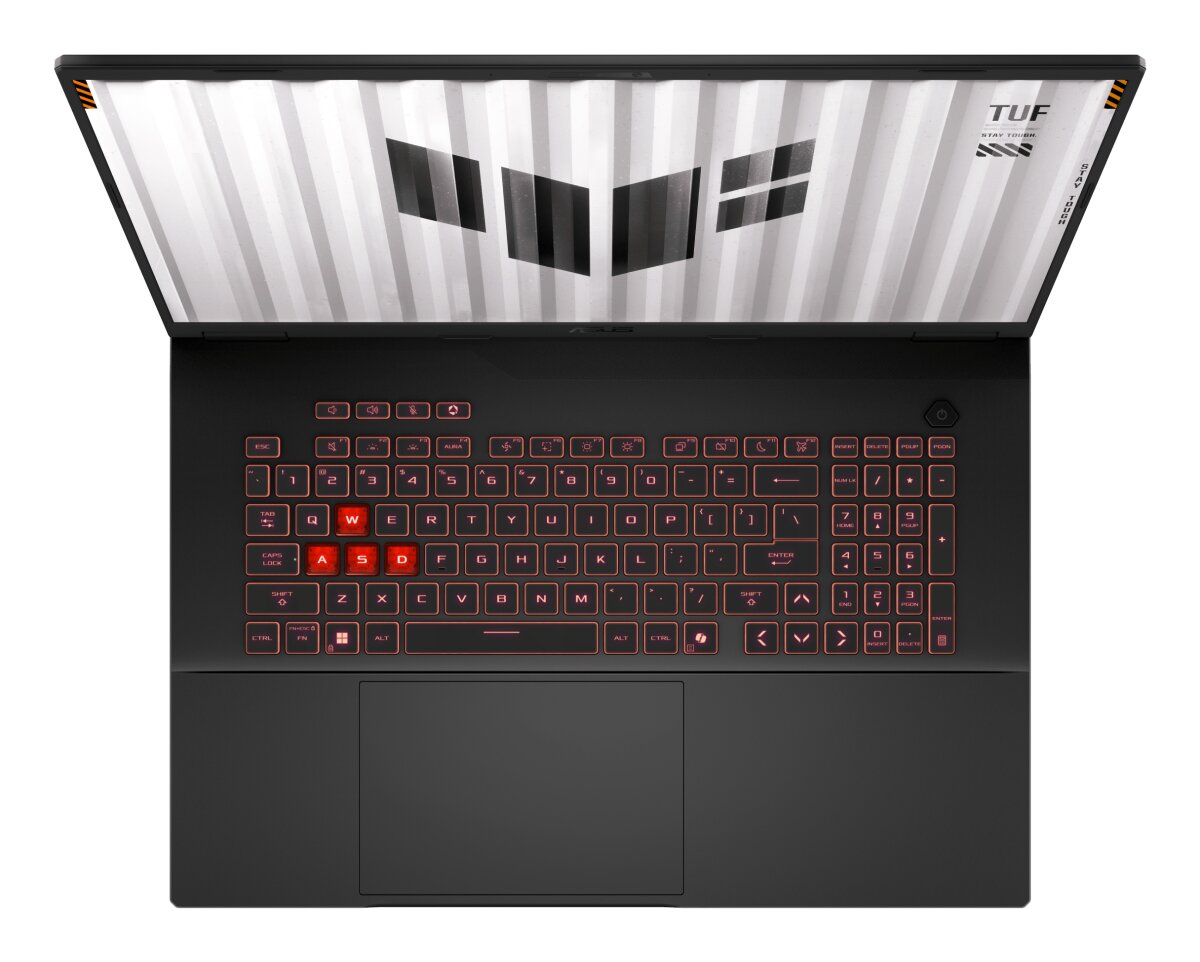
The ASUS TUF Gaming A18 FA808UM-S8011W laptop features DDR5-SDRAM memory specifications with two SO-DIMM slots for RAM upgrades. Maximum compatible memory capacity reaches 64 GB total. The system supports DDR5 memory modules operating at 5600 MHz frequency. SO-DIMM form factor specifications define the physical dimensions required for upgrade modules. Current memory configuration and available slots allow for expansion of existing RAM capacity. DDR5-SDRAM technology provides enhanced performance specifications compared to previous generation memory standards.
Memory Upgrade Specifications
| Specification | Value |
|---|---|
| Memory slots | 2x SO-DIMM |
| Form factor | SO-DIMM |
| Memory type | DDR5-SDRAM |
| Frequency | 5600 MHz |
| Maximum RAM | 64 GB |
| Voltage | 1.1V |
| Number of pins | 262-pin |
| Interface | PC5 |
| PC Speed Rating | PC5-5600 (PC5-44800) |
| Bandwidth | 44.8 GB/s |
Additional Notes
- The ASUS TUF Gaming FA808UM-S8011W implements dual-channel DDR5 architecture, requiring matched module pairs for optimal memory interleaving and bandwidth utilization.
- DDR5-5600 modules operate at JEDEC standard voltage of 1.1V, reducing power consumption by approximately 20% compared to DDR4 alternatives while generating less thermal output during sustained workloads.
- SO-DIMM configuration indicates laptop-specific modules measuring 67.6mm in length, incompatible with standard 133.35mm desktop DIMM modules regardless of electrical specifications.
- The 64 GB ceiling translates to a maximum density of 32 GB per module, requiring single-rank or dual-rank chips with 16Gbit die technology for full capacity implementation.
- Native 5600 MT/s transfer rate delivers theoretical peak bandwidth of 44.8 GB/s per channel or 89.6 GB/s in dual-channel mode, assuming both slots populated with matched speed modules.
- Memory controller compatibility restricts mixing DDR5 generation modules, as DDR4 or DDR3 modules physically cannot insert due to different notch positioning at pin 144 versus DDR5 notch at pin 115.
- Upgrading from factory configuration to maximum capacity requires both slots accessible without motherboard removal, though some designs position one slot beneath keyboard assemblies or thermal solutions.
- Higher frequency modules rated at 6000 MHz or 6400 MHz will downclock to 5600 MHz baseline, as the memory controller's JEDEC specification locks maximum supported speed regardless of module capability.
- Dual-slot population with asymmetric capacities such as 16 GB plus 32 GB maintains dual-channel operation but may introduce flex mode, where only the matched portion operates in interleaved mode.
- CAS latency specifications become critical at 5600 MHz operation, where CL40 modules introduce 14.29ns absolute latency versus CL46 modules at 16.43ns, impacting latency-sensitive applications.
- On-die ECC implementation in DDR5 standard provides error correction within the DRAM chip boundary but does not constitute system-level ECC unless explicitly supported by both CPU and BIOS.
- Module height constraints in gaming laptops typically limit clearance to 30mm, though low-profile variants at 26.7mm exist for ultra-thin chassis with thermal pipe interference concerns.
- Warranty preservation requires verifying whether memory access panels carry tamper-evident seals, as some manufacturers restrict user-serviceable upgrades to specific compartments without voiding coverage.