ASUS TUF Gaming FX607JU-N3090W RAM upgrade specifications




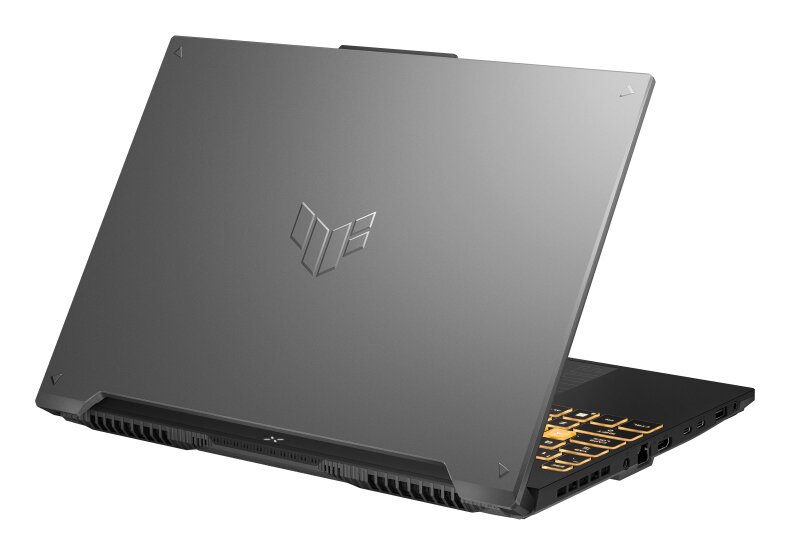
The ASUS TUF Gaming F16 FX607JU-N3090W features DDR5-SDRAM memory upgrade specifications with two SO-DIMM slots supporting maximum capacity of 32 GB total RAM. The laptop is compatible with DDR5 modules operating at 4800 MHz frequency. Memory upgrades utilize the SO-DIMM form factor standard for notebook computers. Specifications indicate the device supports dual-channel memory configuration through its two available slots, enabling enhanced performance for gaming and multimedia applications. Maximum memory expansion reaches 32 GB when both slots are populated with compatible DDR5 modules.
Memory Upgrade Specifications
| Specification | Value |
|---|---|
| Memory slots | 2x SO-DIMM |
| Form factor | SO-DIMM |
| Memory type | DDR5-SDRAM |
| Frequency | 4800 MHz |
| Maximum RAM | 32 GB |
| Voltage | 1.1V |
| Number of pins | 262-pin |
| Interface | PC5 |
| PC Speed Rating | PC5-4800 (PC5-38400) |
| Bandwidth | 38.4 GB/s |
Additional Notes
- The ASUS TUF Gaming FX607JU-N3090W accepts only DDR5 modules, making DDR4 sticks physically incompatible due to different notch positioning on the module PCB.
- DDR5 SO-DIMM operates at 1.1V compared to DDR4's 1.2V, requiring compatible voltage regulation circuitry that older generation modules lack.
- The 32 GB ceiling translates to a maximum of 16 GB per slot when fully populated, as single-rank or dual-rank density limits apply to DDR5 SO-DIMM architecture.
- The 4800 MHz specification represents MT/s (megatransfers per second) rather than true clock frequency, which runs at 2400 MHz with double data rate transfers.
- Mixing modules with different speeds will force all installed RAM to downclock to the slowest module's rated frequency, creating performance asymmetry.
- DDR5's on-die ECC operates independently of system-level error correction, providing baseline data integrity without OS or application visibility.
- The dual-channel configuration requires matched pairs in both slots to enable optimal memory interleaving and bandwidth utilization.
- Higher frequency DDR5 modules beyond 4800 MHz may physically install but will run at the chipset's maximum supported speed of 4800 MHz.
- Single-slot population halves memory bandwidth from 76.8 GB/s to 38.4 GB/s, directly impacting GPU-shared memory tasks and integrated graphics workloads.
- DDR5's increased prefetch buffer depth (16n vs DDR4's 8n) improves burst access efficiency but adds latency penalties for small random reads.
- SO-DIMM form factor restricts heat spreader height to approximately 3.5mm, limiting passive cooling effectiveness compared to desktop UDIMM modules.
- Non-standard XMP or EXPO overclocking profiles may fail to POST, as laptop BIOSes typically lock frequency multipliers to JEDEC standard speeds.
- Warranty preservation requires avoiding modules rated above manufacturer-specified voltage tolerances, as overvoltage can trigger thermal protection logging.