ASUS TUF Gaming FX607JV-QT123W/R RAM upgrade specifications




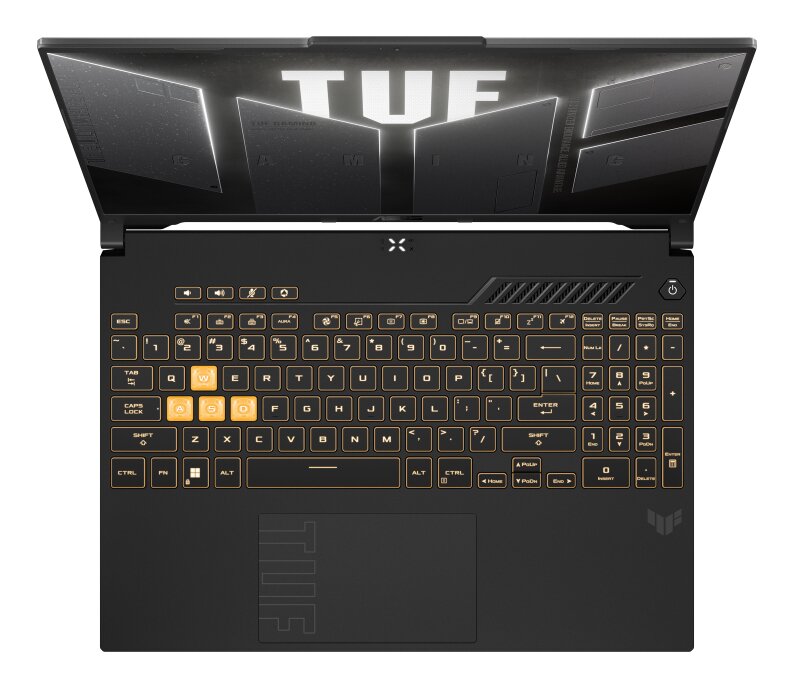
ASUS TUF Gaming F16 FX607JV-QT123W/R RAM upgrade specifications detail DDR5-SDRAM memory compatibility. Laptop contains 2x SO-DIMM slots supporting maximum RAM capacity of 64 GB. Memory upgrade specifications indicate DDR5-SDRAM modules operating at 4800 MHz frequency. Compatible memory modules utilize SO-DIMM form factor standard for notebook computing. Upgrade slots accommodate DDR5 memory technology, enabling system RAM expansion for enhanced multitasking and performance capabilities within specifications framework.
Memory Upgrade Specifications
| Specification | Value |
|---|---|
| Memory slots | 2x SO-DIMM |
| Form factor | SO-DIMM |
| Memory type | DDR5-SDRAM |
| Frequency | 4800 MHz |
| Maximum RAM | 64 GB |
| Voltage | 1.1V |
| Number of pins | 262-pin |
| Interface | PC5 |
| PC Speed Rating | PC5-4800 (PC5-38400) |
| Bandwidth | 38.4 GB/s |
Additional Notes
- The ASUS TUF Gaming FX607JV-QT123W/R supports DDR5 SO-DIMM modules exclusively, preventing the use of DDR4 or older generation memory due to different pin configurations and voltage requirements.
- Both memory channels must be populated with matched modules to enable dual-channel operation, which effectively doubles memory bandwidth compared to single-channel configurations.
- The 4800 MHz frequency represents JEDEC standard DDR5 speeds, meaning higher-speed modules will downclock to this frequency, offering no performance advantage despite increased cost.
- Reaching the 64 GB ceiling requires two 32 GB SO-DIMM modules, as this configuration exhausts both available slots with maximum-density modules currently available for DDR5.
- DDR5 modules incorporate on-die ECC for internal error correction, distinct from traditional ECC memory, providing basic data integrity without OS-level reporting.
- SO-DIMM form factor modules measure physically smaller than standard DIMM desktop memory, making desktop modules mechanically incompatible with the laptop's memory slots.
- The dual-slot configuration allows incremental upgrades, permitting initial installation of a single module with expansion capacity for a second module at a later point.
- Memory operating voltage for DDR5 typically runs at 1.1V compared to DDR4's 1.2V, reducing power consumption but requiring modules specifically engineered for this lower voltage specification.
- Mixing modules with different speeds or capacities may force the system to operate at the lowest common denominator speed, potentially underutilizing faster module capabilities.
- The memory controller integrated into the processor determines actual supported speeds and capacities, meaning CPU specifications may impose additional limitations beyond motherboard capabilities.