MSI Stealth A13VE-014FR RAM upgrade specifications

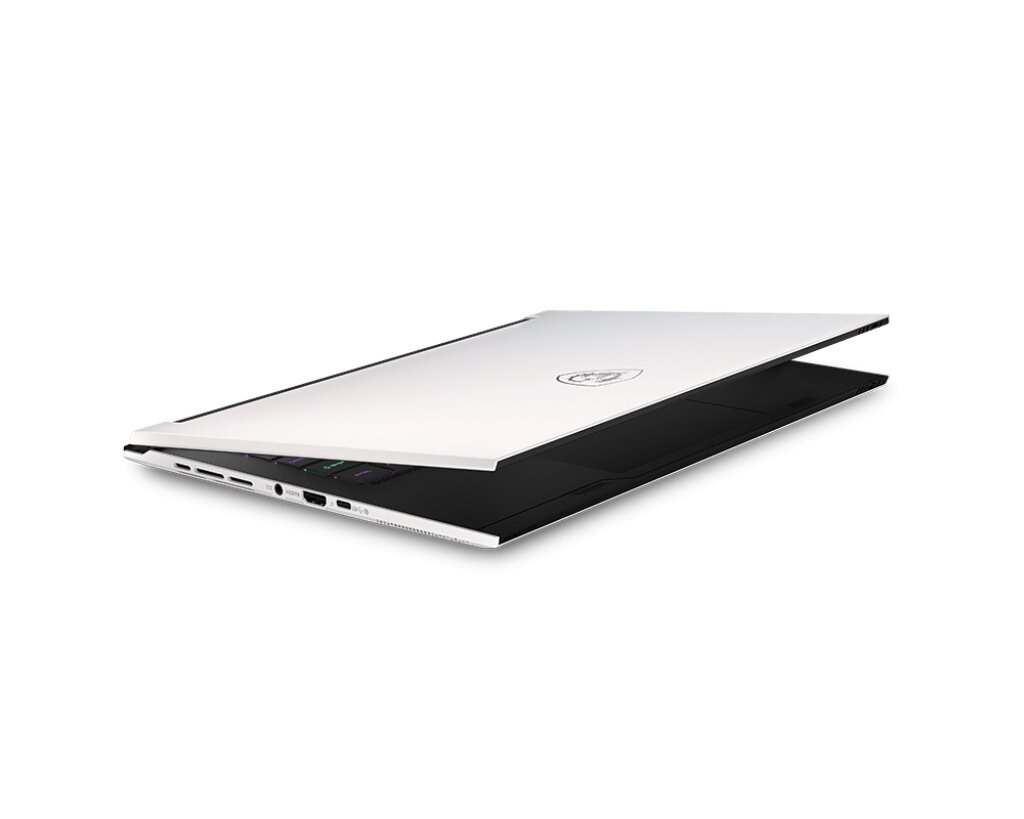
The MSI Stealth 14 Studio A13VE-014FR laptop features two SO-DIMM slots supporting DDR5-SDRAM memory upgrades at 5200 MHz frequency. The system accommodates a maximum memory capacity of 64 GB total. Existing memory modules can be replaced with compatible DDR5 SO-DIMM modules to enhance performance. RAM upgrade specifications for the A13VE-014FR model indicate support for current-generation memory standards, enabling users to expand system memory according to workflow requirements.
Memory Upgrade Specifications
| Specification | Value |
|---|---|
| Memory slots | 2x SO-DIMM |
| Form factor | SO-DIMM |
| Memory type | DDR5-SDRAM |
| Frequency | 5200 MHz |
| Maximum RAM | 64 GB |
| Voltage | 1.1V |
| Number of pins | 262-pin |
| Interface | PC5 |
| PC Speed Rating | PC5-5200 (PC5-41600) |
| Bandwidth | 41.6 GB/s |
| Laptop Release date | 10 November 2023 |
Additional Notes
- The MSI Stealth A13VE-014FR implements DDR5 technology, which operates at significantly lower voltage than DDR4, reducing power consumption but eliminating backward compatibility with any DDR4 modules.
- The 5200 MHz frequency represents JEDEC standard DDR5-5200 specification, though the chipset may support higher XMP/EXPO overclocked modules that will downclock to this native speed.
- Dual SO-DIMM architecture enables dual-channel memory operation when matched modules are installed, effectively doubling memory bandwidth compared to single-channel configurations.
- The 64 GB maximum capacity constraint originates from chipset memory controller limitations or motherboard trace design, requiring 32 GB modules in both slots to reach this ceiling.
- DDR5 SO-DIMM modules incorporate onboard voltage regulation, making them physically incompatible with DDR4 slots due to different notch positioning and pin configurations.
- Native 5200 MHz operation delivers approximately 83 GB/s theoretical bandwidth per channel in dual-channel mode, beneficial for integrated graphics memory sharing and CPU-intensive workloads.
- Mixing modules with different speeds will force all memory to operate at the lowest common frequency, potentially underutilizing faster module capabilities.
- SO-DIMM form factor installation requires accessing bottom panel or keyboard deck, with specific disassembly procedures varying by chassis generation to avoid warranty seal damage.
- DDR5's higher density per module compared to DDR4 allows reaching 64 GB with just 2 slots, where DDR4 would require 4 slots for equivalent capacity.
- Memory timing parameters for DDR5-5200 typically follow CL42 or CL46 standards, though these secondary timings impact real-world latency beyond the base frequency specification.
- The platform supports non-ECC unbuffered memory only, as SO-DIMM ECC modules are physically compatible but lack chipset-level error correction support in consumer implementations.