ASUS TUF Gaming FA507UI-LP171W RAM upgrade specifications

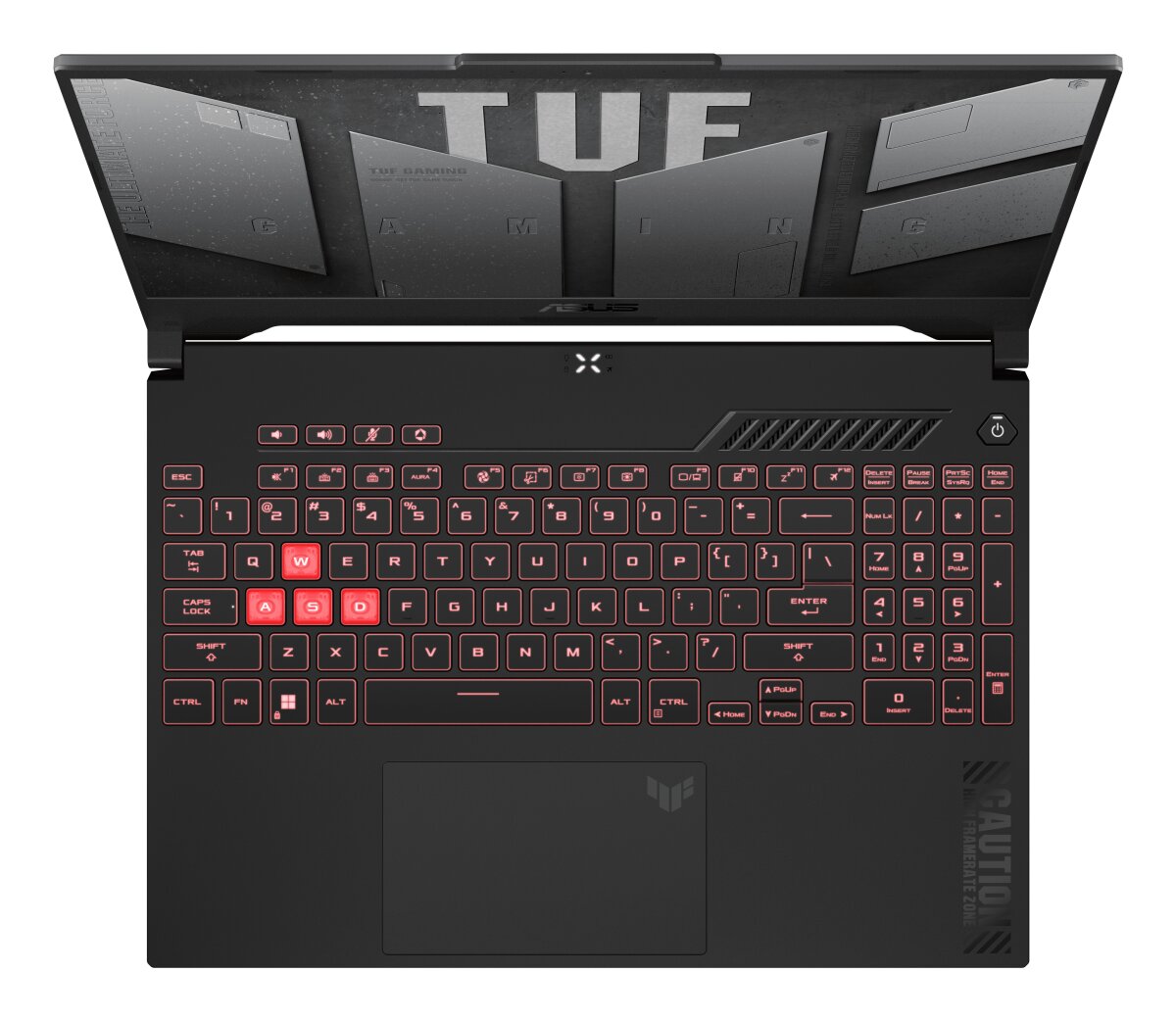



The ASUS TUF Gaming A15 FA507UI-LP171W features DDR5-SDRAM memory upgrade capabilities with two SO-DIMM slots supporting maximum capacity of 32 GB. Compatible memory modules operate at 5600 MHz frequency. The laptop specifications indicate expandable RAM upgrade options through dual memory slots configured for DDR5 technology, allowing users to enhance system performance through compatible SO-DIMM modules up to the maximum supported capacity of 32 GB total RAM.
Memory Upgrade Specifications
| Specification | Value |
|---|---|
| Memory slots | 2x SO-DIMM |
| Form factor | SO-DIMM |
| Memory type | DDR5-SDRAM |
| Frequency | 5600 MHz |
| Maximum RAM | 32 GB |
| Voltage | 1.1V |
| Number of pins | 262-pin |
| Interface | PC5 |
| PC Speed Rating | PC5-5600 (PC5-44800) |
| Bandwidth | 44.8 GB/s |
Additional Notes
- The ASUS TUF Gaming FA507UI-LP171W implements a dual-channel architecture through its 2 SO-DIMM sockets, requiring matched pairs for optimal memory interleaving and bandwidth utilization.
- DDR5 SO-DIMM modules are incompatible with DDR4 sockets due to different notch positions and voltage requirements, preventing physical installation of incorrect generation memory.
- The 32 GB ceiling translates to a maximum configuration of 2x16 GB modules when populating both available slots.
- Operating frequency at 5600 MHz delivers a theoretical bandwidth of 44.8 GB/s per channel, totaling 89.6 GB/s in dual-channel mode under ideal conditions.
- Modules exceeding 5600 MHz may downclock to this native frequency, as JEDEC standards and system firmware enforce maximum supported speeds.
- Non-ECC unbuffered SO-DIMM modules are required, as buffered or registered memory variants designed for server platforms will not function in consumer laptop architectures.
- DDR5's on-die ECC capability operates transparently for data integrity but differs from full ECC memory, providing no user-accessible error reporting.
- Single-rank versus dual-rank module topology affects memory interleaving efficiency, with dual-rank configurations potentially offering marginal performance gains in bandwidth-sensitive workloads.
- Mixing modules with different timings will force all installed memory to operate at the slowest common denominator CAS latency and tRCD values.
- SO-DIMM installation typically involves bottom panel removal, and warranty seals may be present depending on regional regulations and manufacturer policies.
- Thermal considerations become relevant under sustained memory-intensive operations, as DDR5 generates more heat than DDR4 at equivalent speeds despite lower operating voltage.
- Operating voltage for DDR5 standardizes at 1.1V compared to DDR4's 1.2V, reducing power consumption but requiring compatible power delivery circuitry.