MSI Gaming GS77 12UGS-043BE Stealth RAM upgrade specifications




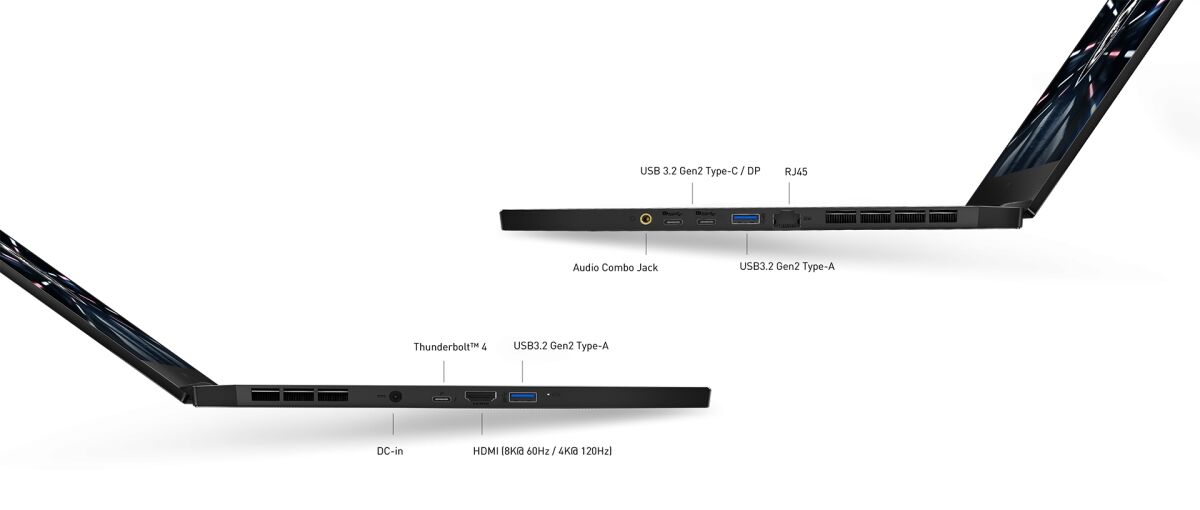
The MSI GS77 12UGS-043BE Stealth gaming laptop features DDR5-SDRAM memory upgrade capabilities. The system includes 2x SO-DIMM slots supporting maximum RAM capacity of 64 GB. Compatible memory operates at 4800 MHz frequency. Specifications indicate SO-DIMM form factor modules are required for RAM upgrades on the GS series model. Maximum memory configuration reaches 64 GB total capacity across available slots.
Memory Upgrade Specifications
| Specification | Value |
|---|---|
| Memory slots | 2x SO-DIMM |
| Form factor | SO-DIMM |
| Memory type | DDR5-SDRAM |
| Frequency | 4800 MHz |
| Maximum RAM | 64 GB |
| Voltage | 1.1V |
| Number of pins | 262-pin |
| Interface | PC5 |
| PC Speed Rating | PC5-4800 (PC5-38400) |
| Bandwidth | 38.4 GB/s |
| Laptop Release date | 07 February 2022 |
Additional Notes
- The DDR5-SDRAM specification prevents backward compatibility with DDR4 modules due to different pin configurations and voltage requirements.
- The 4800 MHz frequency represents the baseline JEDEC standard for DDR5, with higher-speed modules potentially requiring manual XMP profile activation in BIOS.
- The MSI GS77 12UGS-043BE Stealth dual-channel architecture requires matched pairs for optimal memory interleaving and bandwidth utilization.
- SO-DIMM physical dimensions differ from desktop DIMM modules, making standard desktop memory mechanically incompatible with this chassis.
- The 64 GB ceiling requires 32 GB modules in both slots, eliminating asymmetric configurations beyond this threshold.
- DDR5 modules operate at 1.1V compared to DDR4's 1.2V, reducing thermal output but requiring compatible voltage regulation circuitry.
- Single-slot population halves available memory bandwidth by disabling dual-channel operation, affecting integrated graphics and memory-intensive applications.
- Mixing modules with different CAS latencies forces both modules to operate at the slower timing specification.
- The 2-slot limitation prevents future expansion beyond initial installation without complete module replacement.
- SO-DIMM retention clips differ mechanically from desktop systems, requiring horizontal insertion rather than angled installation.
- Non-ECC unbuffered modules represent the only compatible architecture, as registered or ECC memory requires different chipset support.
- DDR5's on-die ECC operates transparently without system recognition, distinguishing it from traditional ECC memory reporting.